Friday, March 26, 2021

Eat, Drink, and Be Wary

A couple of weeks ago I wrote about disposing of unfinished liquor bottles that had been sitting too long in the cabinet. This apparently has not been a necessary chore for a sizable chunk of the population lately: few bottles have gone unfinished during the pandemic. Psychiatrist William Scott Killgore of University of Arizona's College of Medicine wrote in the February Psychiatry Research, “many people are relying on greater quantities of alcohol to ease their distress.” Indeed. Alcohol consumption by those not affected significantly by the lockdown (for whatever reason) didn’t change. For those who were significantly affected by the lockdown, however, he noted that “hazardous alcohol use” rose from its normal (but high enough) 21% in April 2020 to 40.7% by last September based on answers to the Alcohol Use Disorders Identification Test. Severe dependency rose from 4% in April to 17.4% in September. Probable dependency reached 29%. Alcohol consumption rose for much of the remaining affected population, too, even if it didn’t reach hazardous levels.
 
Ironically, this makes drinkers who are locked down more susceptible to Covid. The World Health Organization remarked on its European website, “Alcohol consumption is associated with a range of communicable and noncommunicable diseases and mental health disorders, which can make a person more vulnerable to COVID-19. In particular, alcohol compromises the body’s immune system and increases the risk of adverse health outcomes.”
 
The highest risk comes from combining alcohol abuse with obesity, which also has increased during the pandemic; higher obesity rates in wealthier countries accounts for much of the higher lethality of Covid in those countries. The Abstract of an NIH study states, “Our hypothesis suggests that a combination of alcohol consumption and obesity causes low immunity and makes the individual prone to develop ‘cytokine storm’ and ‘acute respiratory distress syndrome’; the hallmark of COVID-19 mortality and morbidity. Thus, we propose that reducing any one trigger can have a beneficial effect in combating the disease severity.”
 
It may come as no surprise that obesity has soared during the lockdown. While I’ve not increased my tippling during the pandemic, I regret that I have not been immune to raiding the refrigerator. Unlike the liquor cabinet, the fridge has not needed a clean-out of unfinished meals. My bedroom mirror finally frightened me at the beginning of December. Since then I’ve dropped 20 pounds (9 kg) but that’s only halfway toward my (by no means thin) target weight, so there is still a fat guy in the mirror motivating me to stay hungry. The problem with reining in overeating, of course, is that unlike alcohol one cannot simply stop cold turkey. (I could do with some cold turkey – on whole wheat with tomato and mayo.) That makes it trickier, but we do what we can.
 
Cold Turkey


To the extent the lockdown has led to increased obesity, it also has had the unintended consequence of increasing the severity of Covid infections. According to a January 2021 article in Nature, “Furthermore, novel findings indicate that specifically visceral obesity and characteristics of impaired metabolic health such as hyperglycaemia, hypertension and subclinical inflammation are associated with a high risk of severe COVID-19.” Most of us know infected people who shrugged off Covid with nary a sneeze and others who were knocked squarely (perhaps lethally) off their feet. 60 – 90% (yes, that’s a big range of uncertainty) of the severe cases have significant co-morbidities, and obesity (with its common health effects) is definitely a risk factor.
 
Self-reported weight gain among Americans having experienced lockdowns according to one study has averaged 2 pounds (.9 kg) per month. (People tend to lie even on anonymous surveys for some reason [wishful thinking?] so the real number may be higher; we know Americans drink more than they say they do, for instance, because the alcohol tax brings in 50% more than it should if they were telling the truth.) This is in line with my own experience: I needed to lose 20 pounds before the pandemic, so I’m actually back to where I was this time last year but not to where I aim to be.
 
In truth, the pandemic is not a big factor in my ongoing effort to lose pounds. Vanity is a slightly bigger one. Mostly, though, it is just the hope that being fitter will feel better in a more general sense. At my age that might be a fantasy. Nothing will restore me to feeling 18. We all need our fantasies though, and there are worse ones to have. Without it I could all too easily give up and resemble Ella Mae’s Mr. Five by Five.
 
 
Ella Mae Morse – Mr. Five by Five (1942)


Wednesday, March 17, 2021

Singular Triad

 
The painfully uneven slow-walk back toward normality (which itself seems abnormal by now) means there is still much time in evening hours to entertain oneself by oneself. Here are three of my picks for the job from the past week.
 
The Glass Slipper (1955)
 
It is my habit once every week or two to randomly pick a movie from my DVD collection. Well, almost randomly. My DVDs are arranged chronologically: not meticulously by precise release date but by decade. A 1938 could be bracketed by a 1934 and 1936 but there won’t be a 1948 separating any two from the ‘30s; this is more than sufficiently ordered for my purposes. So I have an idea of the probable age range of the movies toward which I reach with eyes closed when I stand (or crouch) in front of one general area of the shelves, but the particular movie on which a finger alights is still a surprise. My reasoning is that if I really don’t want to watch the movie I blindly pick (even though I want to watch some movie or I wouldn’t be picking at all) it shouldn’t be taking up shelf space. (The true turkeys already largely have been removed by this process.) I often have doubts about what gets selected in this way, but rarely do I regret the pick after the first 10 minutes of playing it.
 
There were no regrets at all about last night’s DVD. Filmed five years after Disney’s animated hit Cinderella, MGM’s 1955 The Glass Slipper is the most interestingly off-beat iteration of the story ever made by a major studio. The production reportedly was a nightmare for many of those involved: screenwriter Helen Deutsch stressfully (but successfully) fought constant interference from the producer, director Charles Walters fought (unsuccessfully) against the ballet dream sequences, and Michael Wilding (the Prince) tried repeatedly to resign from the role because he thought he was unsuitable for the part. Only Leslie Caron enjoyed the experience. Yet, it works. Even Walters’ self-doubt, to the extent it manifests on screen, humanized a character that might have seemed too arrogant otherwise.
 
Caron’s Ella (the nickname “Cinderella” is a taunt) is temperamental, tomboyish, and feisty. On her first meeting with the prince, who pretends to be the son of the palace cook, she pushes him into a pond. In case we don’t get that she lashes out at others because she feels bad about herself, Walter Pidgeon explains her motivations in Freudian fashion in a voiceover that verges on parody of the Disney technique. The village crazy lady acts as the fairy godmother of the tale. The dream sequences with Les Ballets de Paris are trippy – an out-of-fashion but wholly applicable adjective. As in many films from the era the pacing isn’t rushed, but with a total length of 93 minutes the film doesn’t have time to drag.


The film is utterly enjoyable. It is the only movie version of the story I would watch again of my own accord rather than as an indulgence to company.
** **
 
Ways to Die in Glasgow by Jay Stringer
 
“Write what you know” is the standard advice to aspiring writers. It shouldn’t be taken too literally. It is highly unlikely that a science fiction author knows much about what life is like on the fourth planet of the Trappist-1 star system unless he happens to have been abducted by aliens from there. He isn’t thereby forbidden to write about it. Still, it helps if whatever drama plays out there in his story is grounded in his own experience. For example, fine author of Golden Age sci-fi Harry Harrison in the early days of his career lived in a small Mexican town; he later wrote that the residents of that town were the basis for characters in his novels and short stories. The standard advice is soundest, of course, in novels that strive for realism. The top three of my go-to contemporary mystery/suspense writers definitely benefit from it: South African author Deon Meyer, fellow New Jerseyan Harlan Coben, and Glaswegian Jay Stringer. Even if you’ve never been to Cape Town, Livingston, or Glasgow, the three authors’ intimate feel for the physical and cultural milieus of their hometowns draw you in effectively.
 
I first became aware of Jay Stringer from a brief description in an ER Hamilton book catalogue of his 2016 How to Kill Friends and Implicate People. I bought and enjoyed the darkly humorous mystery in which he breaks a number of writing-class rules and gets away with it nicely. The book also introduced me to Sam [Samantha] Ireland, a recurring PI in his novels. This week’s read, Ways to Die in Glasgow, is another Sam Ireland mystery written in Stringer’s characteristic style of multiple alternating POVs.


Mobster Rab Anderson has grown tired of the criminal life and has found he can make money and become a minor celeb by writing books about it instead. This doesn’t sit well with people who might be implicated in those books including crooked cops. Rab is kidnapped while an attempted hit on his rough-edged nephew Mackie goes awry. A prestigious law firm then hires Sam to serve papers on Rab. She has to find him first, which puts her in the middle of whatever is going on. Whatever it is involves police, politicians, wealthy developers, organized crime, and well connected legal firms – and murders.
 
The noir novel is fast-faced and bloody while the humor is Chandler-esque with a Scottish accent. Good stuff.
** **
 
Harley Quinn
 
As I’ve mentioned in other blogs, there are some pop culture things I watch, hear, or otherwise sample just to be part of the conversation – and perhaps in-person conversations will be something that happen again someday. More often than not I don’t much care for them, but the HBO animated series Harley Quinn proved enjoyable.


The character Harley Quinn has been one of DC’s most bankable villains since her first appearance in the early 90s. For two decades, however, the franchise floundered in its attempts to make proper use of her. The movie The Suicide Squad failed critically but it was profitable anyway, mostly thanks to Margot Robbie’s version of Harley. The subsequent Birds of Prey fared far worse. DC finally regained its footing in print with an intelligently revamped origin story Harleen (which I reviewed last year here) by Croatian author Stjepan Sejic who details the emergence of Dr. Quinzel’s shadow self under the influence of Joker. In 2019 the animated series Harley Quinn came to the small screen with Kaley Cuoco voicing Harley and Alan Tudyk as Joker.
 
Creators Justin Halpern, Patrick Schumacker, and Dean Lorey were executive producers on The Incredibles and bring some of the same irreverence and humor to this show. Harley Quinn, unlike The Incredibles however, is R-rated and brutal – but still smartly written and funny.
 
In Season 1, Harley, with a figurative and literal push from Poison Ivy, finally breaks free of her dependence on Joker but without returning to her old persona Harleen Quinzel. She attempts a reconciliation with her parents but ends up confronting them over the damage they did to her psyche – the confrontation is not bloodless. To take over Gotham she assembles her own gang of villains including a bumbling Bane and a foul-mouthed Dr. Psycho in order to challenge the Legion of Doom in which her ex Joker is a prominent member. The supposed good guys (e.g. Batman, Gordon) are almost uniformly pompous, self-righteous egotists reminiscent of Captain Hammer in Whedon's Dr. Horrible's Sing-Along Blog. The villains would be humanly likable were it not for their propensity for casual murder. Season 2 continues Harley’s evolution including her relationship with Ivy. The show isn’t afraid to be incorrect (an increasingly rare attribute), and when it is politically correct it isn’t preachy about it. The mix is a lot of fun, though very much over the top in violence. Recommended, but not for the easily offended.
 

The other Harley isn’t bad either
The Pretty Reckless - Harley Darling


Friday, March 12, 2021

Cabinet Clearance

Due to you-know-what there hasn’t been a significant get-together at my house in a year. Prior to then there was at least one sizable party per season, usually holiday related: solstices and equinoxes count as holidays. My parties aren’t boozy by normal measures, but they aren’t entirely dry either. My own consumption of alcohol has varied over the years from a bit excessive in my 20s, to near teetotal avoidance in my 30s, to light-side-of-moderate today. The last descriptor might seem subjective, but I’m using the CDC’s guidance to define moderate. According to the CDC, an adult male should restrict his alcohol consumption to no more than 14 drinks per week and no more than 4 in any one day. (A standard drink in the US is 14 grams of pure alcohol, which is equivalent to 1.5 ounce [44.4 mL] of 40% [80 proof] spirits.) I haven’t had 4 drinks in a single day in years. I haven’t neared (much less exceeded) the weekly limit in decades. In consequence of such restrained sippage by either guests or myself, the inside of my liquor cabinet hasn’t seen much daylight (or artificial light) since the early days of 2020. So, earlier today I figured it was time to sort through what was there and spill out what needed spilling.

My liquor cabinet

2019 equinox party

 
Unless stored recklessly, unopened spirits and wines have a shelf life longer than a human lifetime. Once opened, however, even hard liquors go bad in months. How many months depends on how much air is in the bottle. A mostly empty bottle should probably be discarded after 3; a mostly full one is good for 6 months to a year. They don’t go bad in the sense of being dangerous (more than otherwise, that is) but in the sense that they taste awful (more than otherwise, that is). Several partially filled bottles were selected out of my cabinet to intoxicate whatever critters (microscopic or otherwise) live in the drain pipes.
 
There is no cabinet or drawer in my house for other intoxicating substances unless you count caffeine. Despite having lived in a college dorm in the hippie era with constant haze in the hallways and a dealer in psychedelics on every floor, I never cared for any of them. I have been in favor since my teens of legalization of all recreational drugs (not just marijuana) but that always has been on civil libertarian grounds rather than because I have a taste for them. There are other arguments in favor of legalization (the social side effects of the drug war) too, but I trot them out only when debating someone who values social arguments more. For me, though, the belief that free people have the right to make bad choices for themselves is enough by itself. It’s a belief not always widely shared. 120 years ago, true enough, you could buy cocaine and morphine over the counter, but all that changed in the next two decades. 101 years ago alcohol Prohibition began. The current contents of my liquor cabinet, though fairly modest, would have been enough to earn me a prison sentence. Prohibition ended in 1933.
 
Prohibition was enacted by Constitutional Amendment, by the way, because the federal courts (though not state courts) back then did share the quaint idea that the Bill of Rights protected a citizen’s right to make bad decisions. An Amendment got around the real possibility that the Supreme Court might otherwise overthrow a federal ban on alcohol sales. The same concerns account for the bizarre way marijuana was banned by the Marijuana Stamp Tax Act of 1937. Marijuana was not outlawed per se; you simply had to pay a tax on it by buying a stamp. However, you had to bring in the substance to be stamped, and since the marijuana was unstamped when you brought it in you were in violation of the law. This Catch-22 arrangement persisted until 1970 when it was replaced by the Controlled Substances Act. By 1970 there was less concern the Court would overthrow straightforwardly paternalistic legislation. The concern has only lessened since then.
 
Anyway, the cabinet doors are closed again. Perhaps by the solstice I’ll be able to open them again for actual company. Though NJ is stumbling through an obstacle course of the legislature’s own making toward legalization of pot, any guests inclined toward it will have to supply themselves. Nonetheless, perhaps someday (though I don’t see it happening soon) we’ll even revive the general notion that what private people voluntarily do in private settings is nobody else’s business.
 

Bessie Smith – Tain't Nobody Business If I Do (1923)


Friday, March 5, 2021

Junque

 
I’m in the midst cleaning out my barn and fixing up a small house I’ve owned for years to ready it for sale. The process has evoked unexpected nostalgia even though I have no emotional attachment to any of the junk per se or to the real estate. I suspect the reaction is from an implicit acknowledgement of aging. Most of the things in the barn (along with the small house for that matter) targeted for removal have been retained up until now on the “I may do something with this someday” theory. The bulk of them (not actually garbage in the usual sense, but things such as screens, hardware of all kinds, specialty tools, mismatched lumber, cabinet pieces, etc.) were stored there by my dad (gone more than 20 years now) on the same “I may do something with this someday” theory. The realities of time being what they are, I’m really not going to do anything more with them than he did if I keep them. Yet, removing them (whether by sale, gift, or disposal) is a recognition of doors closing.

the barn

 
Nostalgia is tricky. It’s not just about missing the past, such as that special someone in one’s youth who got away. (Odds are we are lucky that particular someone got away.) It’s about missing past futures. We miss having had the option of a certain kind of future with that someone as much as (or rather than) miss the person herself. Everyone has biological clocks that tick at different speeds for different activities. As we age, our options constrict – quicker in practical terms than in hypothetical terms. Yes, in principle someone in his or her 60s, for instance, still could go to medical school and complete residency by age 80, but I think we can agree that as a practical career plan that option faded decades earlier. With each passing year our realistic possible futures become more limited. It begins early. By our late 20s most of us are weighing time costs (of more education for example) against the benefits, and sometimes the costs already are too high. So, while we remember past people, places, and events when in a nostalgic mood, we also contemplate the past world of possibilities associated with them.
 
Of course, we never really know how much future (and therefore how many possible futures) we have at our disposal. Actuarial tables give us the odds, but the distribution curve has, as they say, fat tails: there are a lot of outliers. It is uncertain what is the maximum lifespan for a human being. During the time of Charles I, there was the case of Old Tom Parr who married at for the first time at 80 (fathering two children) and for the second time at 122. He eventually succumbed in 1635 at age 150 shortly after being entertained (on account of his age) at Charles’ court. However, recordkeeping was somewhat questionable in those days, so modern historians tend to be skeptical that the numbers are right.
 
The oldest person for whom the records are reliable was Jeanne Louise Calment who died in 1997 at age 122 (and 164 days). One poor fellow in Arles made the biggest mistake of his life by betting against her based on actuarial tables. André-François Raffray at age 47 signed a contract to buy Calment’s Arles apartment en viager, by which Calment not only retained life rights to occupy the apartment but received a 2500 franc monthly check besides. Calment was 90 at the time. Raffray quite reasonably expected he would be on a hook for perhaps a few years, which would mean the apartment was a steal. Calment outlived Raffray by three years. What was Calment’s secret to a long life? Well, she did quit smoking – at age 117. She also drank port wine every day and ate two pounds of chocolate per week.
 
A curious thing about centenarians – especially those over age 105 – is how infrequently they follow usual health advice about exercise and diet. Muriel Froomberg, who died in London in 2017 at age 108, drank a bottle of whisky a week and touted its benefits. Antonio Docampo Garcia (died 107) drank up to four bottles of homemade wine per night – he disdained water. Batuli Lamichhane (119) of Nepal never quit her 30 cigarette per day habit. Susannah Mushatt Jones of Brooklyn (died 116) recommended eating bacon. Richard Overton (died last year at 112) of Texas credited his health (or at least his happiness) to cigars, bourbon, and ice cream. A Japanese study of seven people over 110 may give some clue about what is going on here. The seven have (and apparently were born with) exceptional immune systems. Specifically, their CD4 T-cells actively attack viruses and cancerous cells with an effectiveness not seen in average people. So, they can get away with (perhaps even benefit from) lifestyles that might kill the rest of us.
 
Are you one of those destined to live over 110 years? Probably not. You and I might well be on the nearer tail of the actuarial curve rather than the further. But you never know. With that thought, I think I’ll keep some of the stuff I had earmarked in the garage after all. I might use it for something someday. And that decision, too, feels like old times.


Diane Keaton  Seems Like Old Times


Wednesday, February 24, 2021

The Big Snooze

This morning a cat jumped on my head as I lay in bed. I glanced at the digital clock. It read 9:15. There is no particular time when I need to get up in the morning anymore, so I was wasn’t late for anything (except from the perspective of a hungry cat), but that was an anomalous reading nonetheless. 8:00 a.m. is a more typical time for me to arise these days, and even that feels very lazily late to me after decades of school and work schedules that demanded much earlier rises. Even if I’m up until 3:00 a.m. (once commonplace but now a rarity) I’ll most likely be up before the readout changes from 7:59 to 8:00. During the day I’ll notice the missed hours of sleep however. I have no explanation for this morning’s delay other than that whatever complex regulates such things (suprachiasmatic nuclei and the pineal gland have something to do with it, most sources say) decided I needed more sleep, just as some mornings (like yesterday) it decides I should be wide awake at 7:00, and on some nights (thankfully few lately) it decides I won’t sleep at all.


It’s not entirely clear why we need sleep. There are numerous hypotheses ranging from resetting the immune system to consolidating memories, though despite decades of research they are only hypotheses. (One suggestion is that it kept our ancestors out of trouble at night when they couldn’t see dangers well if they wandered around, though it seems to me that a bunch of snoozing hominins would be very vulnerable to predators.) There are notable negative physical effects from not getting enough sleep including hormonal imbalance, hypertension, and increased risk of obesity, diabetes, and heart attack. There are a handful of people who get by on just a few hours per night without noticeable ill effects (a study published in Science implicates a genetic mutation on the gene DEC2 as the cause) but even they need some sleep; they are just more efficient sleepers who get done in less time whatever the rest of do when zonked out for eight hours. As that may be, it is unknown for certain whether it is sleep per se that is healthful or whether it is the thwarting of the sleep-inducing systems that is unhealthful. In a disturbing 1989 study at the University of Chicago, ten rats were subjected to total sleep deprivation. All of them died between day 11 and day 32. No cause of death could be found. There were symptoms to be sure including odd ones such as lesions on the tails, but nothing normally lethal such as organ failures or blood poisons. They just died.
 
For obvious reasons, the research team didn’t repeat the experiment on people, but there have been numerous less extreme sleep deprivation experiments on humans. The record for sleep deprivation is held by Randy Gardner who was 17 at the time. (There are accounts of others who since have beaten his record, but they are not independently verified.) In 1964 he stayed awake for 264.4 hours: over 11 days. He found the experience awful and lost a grip on reality toward the end (hallucinations are common in cases of severe sleep deprivation), but after a 14-hour nap he recovered completely. There were no health aftereffects.
 
The longest I ever was awake at single stretch was 75 hours. This was at George Washington University as long ago as 1974. I was wrapping up two term papers before their deadline. All the (pre-internet) research was finished and the papers were roughed out, but they still needed substantial work. With no other stimulants but Mountain Dew (for readers in countries where it isn’t sold, Mountain Dew is a caffeinated fizzy drink) I plugged away for three days without sleep. At 10:40 a.m. on the due date, a Friday, I finished typing the very last bibliography entry, grabbed both papers, and left my dorm on 19th Street. One paper was due at 11 and the other at 1. As I strolled along F Street my vision was fuzzy, the DC street sounds and my own voice were oddly muted, and my feet felt as though big soft pillows were strapped to them. Door handles felt rubbery. The experience wasn’t quite hallucinatory, but it came close. When I returned to my dorm after delivering the papers I slept for 12 hours. I didn’t know what day it was when I woke up. I’m satisfied to let 75 hours stand as a personal best. I’ve since gone as much as 40 hours at a stretch, but unintentionally: a sleepless night occurs now and then. It makes one appreciate the next snooze. Rita Rudner: “Sleep is the best of both worlds; you get to be alive and unconscious.”
 
Sporadic short-term insomnia is normal: stress, worries, heartburn from overeating, and even itches can cause it, along with a multitude of other things. Sometimes there is no discernible reason, in which case you might as well get up and do something else. This type of insomnia is self-limiting. At some point our own biology will put us to sleep. Chronic insomnia is another matter. Any number of medical and mental health problems can cause it that are worth addressing. For most of us most of the time, however, insufficient sleep isn’t something forced upon us. It is our own fault: we stay up too late even if we must get up early. It’s a hard habit to break, but the benefits are large if we do. "For any purpose requiring the Energy whether of the Body or the Mind,” wrote Dr. William Kitchener in his 1821 book The Art of Invigorating and Prolonging Life, "A 'forty-winks' nap in an horizontal posture is the best preparative for any extraordinary exertions of either." So too.

Sarah Vaughan – Through a Long and Sleepless Night


Wednesday, February 17, 2021

Sound and Fury Signifying Nothing

Well, maybe just a little something. Two reviews:

** **
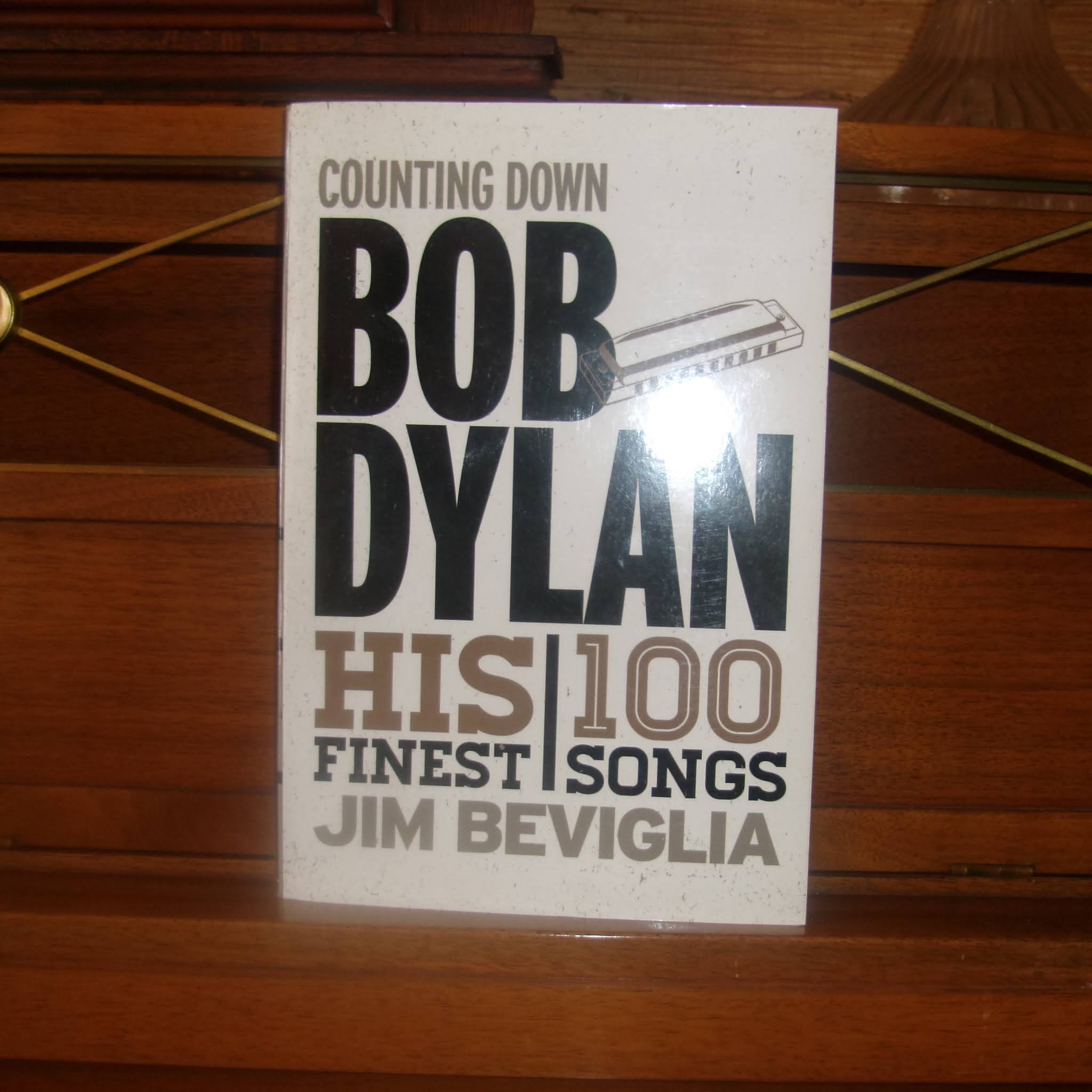
Counting Down Bob Dylan: His 100 Finest Songs by Jim Beviglia
 
Most of us are dilettantes most of the time. We dabble in this and that, sometimes out of simple interest and sometimes for some productive purpose. Either way, we rely on the specialists who research, organize, and present the information in which we can dabble. Suppose you wish to write some historical fiction involving, say, a Carthaginian merchant trader: you will want to know something about what the ships of that era were like. (The book to consult in that case would be The Ancient Mariners by the superb classicist Lionel Casson.) You don’t need to know everything: just enough to suit the needs of your story, but that requires the detailed work of a scholar from which to pick and choose.
 
Jim Beviglia is quite the specialist regarding the music of Bob Dylan. His familiarity with Dylan’s albums from repeated listening goes beyond simple fandom. For example, he writes about understanding the gist of the song “Lily, Rosemary, and the Jack of Hearts” from the 1975 Blood on the Tracks album, “It probably won’t happen the first time; it may not even happen the tenth.” I’m more of a Dylan dilettante. I like and admire much of his music, but I have no wish to listen to the Western-flavored “Lily, Rosemary, and the Jack of Hearts” ten times. I’m glad Beviglia did however. I’m also glad he wrote about it since the next time I do hear it I’ll be able to get more out of it than I likely would on my own.


All such lists are idiosyncratic. His #1 pick “Sad-Eyed Lady of the Lowlands” from the 1966 Blonde on Blonde album probably isn’t yours. Though I like the song it isn’t mine. Songs and genres (Dylan performs in several) affect each of us in a personal way. He acknowledges this when commenting on his #10 pick “Like a Rolling Stone”: “Which is why labeling it the best rock song of all time and labeling it the tenth best Dylan song need not be contradictory statements.” Fortunately, 100 songs are enough to cover the spectrum. He gives a page or two of analysis to each number.
 
Dylan’s lyrics can be deep pockets that accommodate a lot of different meanings, but they somehow often affect us on a subverbal level as well. Beviglia makes sense of the lyrics where he can and explains why opacity is sometimes better where he can’t. The lyrics even when seemingly simple often subvert themselves. In the case of It Ain’t Me, Babe, for example, the narrator’s surface admission that he doesn’t measure up has an underlying accusation that the demands are unreasonable: “someone who will die for you and more.” Beviglia doesn’t get hung up on the words alone but gives due regard to the musical whole. Dylan no doubt would approve, for in his acceptance speech for the Nobel Prize in literature he told the committee they had made a mistake: “But songs are unlike literature. They’re meant to be sung, not read. The words in Shakespeare’s plays were meant to be acted on the stage. Just as lyrics in songs are meant to be sung, not read on a page. And I hope some of you get the chance to listen to these lyrics the way they were intended to be heard: in concert or on record or however people are listening to songs these days.” (He took the prize money though: he’s not a dummy.)
 
A lot of the expected Greatest Hits songs are included on Beviglia’s list but so are relatively obscure selections from every studio album (and from a couple bootlegs) up through 2012 including albums from the 1980s, which were not Dylan’s best regarded decade. (“Greatest hits” and “finest” are not interchangeable terms, after all.) There are also representatives from every one of his genres including folk, blues, country, rock, and however one might categorize what he did with the Traveling Wilburys. My copy of the book is currently on a shelf under my stereo where it is likely to remain for consultation the next time I dabble with a Dylan album.
 
One glaring omission from the book is not the author’s fault since it was published prior to Dylan’s 2020 album Rough and Rowdy Ways, which I reviewed positively last August. I think one or two numbers from this album might otherwise have muscled into the 100.
 

** **
The Pretty Reckless – Death by Rock and Roll
 
Like most of my generation I find the bulk of today’s hit pop music uninspiring – not offensive, just meh. Fortunately for those of us who don’t want to just keep replaying old music instead, there is plenty of solid work being done by young rock and blues artists. They even have big youthful audiences: just not big enough for any of their albums to have cracked the top ten billboard chart in more than a decade. One finally has. It is by a band Amazon has recommended to me for years based on my other purchases, and on this occasion I took the AI’s advice.
 
There always are some bands that it is chic to dismiss (along with their fans) for reasons other than their music even as they remain a significant presence in the industry. One of them since 2010 has been The Pretty Reckless. It’s been a long time since I was a kid and I have no kids of my own, so I never watched a kid-oriented TV show called Gossip Girl and thereby was unaware prior to a few months ago that frontwoman Taylor Momsen, currently 27, had a previous career as a child actress. It has been a double-edged sword for her: instant name recognition but a tendency for many not to take her seriously on that account. Also, she happens to be an exceptionally attractive young lady and isn’t remotely shy or apologetic about exploiting the fact, which is also double-edged in today’s peculiar social environment. The band’s 2021 album Death by Rock and Roll should put an end to that dismissal. It is rock to take seriously.
 
Out of curiosity I have also sampled the band’s previous three albums, which are OK. They have a few genuine highlights, but overall they are generic hard rock that is just OK. They sound like a band that would be a favorite at the local pub but nothing more. (Remember music clubs? Was that only a year ago?) The new album is still straightforward rock and roll but it has a mature sound and definitely has benefited by input from members of Soundgarden and Rage Against the Machine. For those of us tired of electronic sounds and overmixing, it is refreshingly real. The lyrics are affecting, the vocals are strong, and the instrumentals professional. It’s a good album.
 
Three of the tracks may be familiar to the reader since they were released as singles in 2020. The title track was a major hit while an acoustic version of it (not on the album but on YouTube) was almost as popular as the fully amped one. The album itself was delayed, first by the deaths of two people associated with the band and then by covid restrictions. The tracks are not all of a kind but range from the thumping “My Bones” to the melodic “Got So High.” “Rock and Roll Heaven” refers back to Taylor’s own age: 27 being the year rockers notoriously have trouble getting past.
 
It is only February and, in truth, I don’t listen to many new albums anymore anyway, but with those caveats it’s my favorite album of the year so far.

Death by Rock and Roll, title track


Sunday, February 14, 2021

Small Lives

 For the past year our macroscopic lives have been dominated by the microscopic: a pathogen that is not by most definitions “life,” though it teeters on the edge. A virus is just DNA or RNA wrapped in protein. By itself it doesn’t do anything. It is great at not doing anything. One dug up in Siberia in 2014 (Pithovirus sibericum) had been doing nothing for 30,000 years, but when introduced to an amoeba it quickly highjacked the cell’s machinery to make more of itself, as viruses do. Few last that long of course. Outside a living organism in exposed environments a virus more typically lasts a few hours – in direct sunlight most (including coronavirus) are destroyed in minutes. Give one a little shade and moisture however, and it can last days. Give it permafrost and apparently it lasts millennia.
 
The overwhelming majority of viruses ignore us. They prefer infecting bacteria or nonhuman large organisms. Even when they hang out inside us, most do nothing. According to biologist Dana Willner at San Diego State University, samples show a healthy human at any moment has on average 174 species of virus in the lungs alone. They do no harm there. Of all the millions of species of viruses in the world, just 263 (depending on how you count different strains of the same virus) are known to affect humans. These can find their way into us in a variety of ways – the nose being a favored but definitely nonexclusive entrance. Counterintuitively, kissing is not very effective for viral transmission, which is probably good news for Valentine’s Day. A University of Wisconsin test of volunteers with colds who tried to infect other volunteers by means of kisses resulted in almost no viral transmission. Droplets from sneezes or from touching one’s own face with contaminated hands are far more effective at spreading colds.
 
Star Trek: "The Immunity Syndrome"

While the mouth (saliva in particular) may be unfriendly to most (not all) viruses, it’s a welcome host to a variety of bacteria and protids. Kissing does transmit these. In fact, a typical French kiss will transfer about 1 billion bacteria between the osculating couple, along with other bits of detritus that it is best not to list. They seldom cause trouble, but they can be bad news when they do. 1,415 are known to cause disease in humans. Once again, that is a tiny percentage of the microbes we encounter, but they are enough. Most of the bacteria and protids inside us are harmless while many are beneficial. In the gut, some are vital for digestion to work properly. Each of us carries trillions of bacterial cells: more than the number of cells that make up our own bodies. Since bacteria are so much smaller than our own cells, however, they account for only 3 pounds (1.35kg) of an average person’s weight.
 
A worrisome trend is that the bacteria that do us harm are growing tougher thanks to our own success in developing (and overusing) antibiotics. This risk was understood very early. In his 1945 acceptance speech for the Nobel prize, Alexander Fleming (discoverer of penicillin) warned that microbes would develop resistance. Germs that are still susceptible to penicillin today sometimes require doses an order of magnitude greater than they did in the 1940s. New antibiotics continue to be developed, but they in turn diminish in effectiveness with use. The day may come when we will need to be as careful of random scrapes and minor injuries as our 19th century forbearers.
 
In the end, as in the beginning, the world belongs to the microbes. We are the brief interlopers. For the huge majority of earth’s geological history, algae, protids, and bacteria were the only life that existed. When the sun’s evolution makes the earth uninhabitable for large plants and animals (as it will in a few hundred million years regardless of human activity – assuming some other disaster such as an asteroid or supervolcano doesn’t end us first), microbes will be all that remain. They were here before us and they’ll be here after us. Had microbes the capacity to consider us at all, perhaps they would regard us a benign infestation that aids in their reproduction and digestion. They should party it up while the buffet lasts.
 
 
Weird Al Yankovic – Germs