For recreational reading this week I indulged in some
escapist fare. Long before his mainstream success as a novelist and in Hollywood
(e.g. Jurassic Park), the
overachieving Michael Crichton while still a Harvard med student wrote pulp
crime fiction novels on the side under the pseudonym John Lange. They aren’t
bad. In the 1972 novel Binary a
domestic political extremist hijacks a nerve gas shipment and plans to release the
gas in San Diego. The title refers (primarily) to a safeguard in the most advanced
chemical weapons stockpiled by the US at the time: two components of the nerve gas
were kept separate. Neither was deadly on its own; they were lethal only when mixed
and they would be mixed only when used. Sometimes, as in binary artillery
shells, mixing would occur when the projectile was in flight. Now that I describe the plot, it somehow seems less escapist.
One of the more enlightened decisions of the Nixon Administration, by
the way, was unilaterally to eliminate US stockpiles of lethal chemical and
biological weapons. Nixon stated that nuclear weapons were a sufficient
deterrent to all forms of weapons of mass destruction, which was a clear
implication that any attack on the US or its allies with any type of NBC
(nuclear/biological/chemical) weapon would be grounds for nuclear retaliation. Eliminating
the stockpiles safely took time, however, so they really were being transported
on highways to facilities for processing and disposal under dubious security arrangements
at the time the Crichton/Lange book was written. They didn’t require a lot of
expertise to use. Short of acquiring a functional and armed nuclear warhead
intact, on the other hand, terrorists would be unlikely to be able to do
anything with hijacked nuclear materials other than, perhaps, contaminate an
area by dispersing them. The most realistic nuclear danger always has been and still
is from governments. The US has never declared a definitive “no first use” policy on
nuclear weapons. The Soviets did, but nobody believed them. Official Russian
military doctrine (English source War on the Rocks) promulgated in 2014 more honestly states, “The Russian Federation reserves the right to use nuclear
weapons in response to the use of nuclear and other types of weapons of mass
destruction against it and/or its allies, as well as in the event of aggression
against the Russian Federation with the use of conventional weapons when the
very existence of the state is threatened.” The Congressional Research Service 2021 report titled Russia’s
Nuclear Weapons: Doctrine, Forces, and Modernization concludes the unofficial (real) doctrine may be less cautious: "When
combined with military exercises and Russian officials’ public statements, this
evolving doctrine seems to indicate that Russia has potentially placed a
greater reliance on nuclear weapons and may threaten to use them during
regional conflicts." This is sometimes called a policy of “escalate to
de-escalate.” The report’s conclusion is supported by commentary in other Russian
official documents such at the 2017 naval doctrine,
which states that deterrence can be achieved during an escalating conflict by “demonstrating
the willingness and determination to employ force, including non-strategic
nuclear weapons.” This isn’t much different from US policy. (Nor is it much
different from that of the UK, France, North Korea, Pakistan, and India; China
officially has a “no first use” policy, though unofficial policy is anyone’s
guess; Israel doesn’t admit to having the 100 or so weapons everyone assumes it
has, so it can have no official position; South Africa dismantled its nuclear
weapons in 1989.) Accordingly, the risk remains what it was during the Cold War:
misjudgment of an opponent’s response either to a threat to use or to the actual
limited use of tactical nukes with the result that events escalate out of
control. This is just something to keep in mind while playing brinkmanship
games in places such as Ukraine. I’m of an age to remember the height of the Cold War. There
was a weird sort of dark humor about the whole thing that was prevalent at the
time – a way of coping with what was beyond our control. I posted some years
ago about my memories of the Cuban Missile Crisis: see 22 October.
I remember well the civil defense drills in school. Recalling them does not
evoke nostalgia. Schools are scary enough these days without having cause to
restart them.
I grew up in the town where I currently live. My mother grew
up in the same town. My family operated businesses (all in some way real estate
related) in this town since the 1950s. Accordingly, quite a few locals know me,
at least in passing. Most don’t anymore to be sure, especially relative
newcomers. (I closed my Main Street office in 2014.) To the overwhelming
majority of residents I’m just another anonymous face. But enough do,
especially old-timers, that it is rare for me to go the market or to lunch or
some other local public place without getting at least one nod or wave or “Hi
Rich” from someone other than the staff. The reverse, of course, is true as well.
Among the many strangers in those places there is always someone I know at
least in passing. (Fewer each year, truth be told. I sometimes joke that I know
more local residents in Hilltop Cemetery than I do above ground, but the “joke”
is very nearly true.) On the occasions when conversations happen in such
encounters (as when someone familiar sits at the same lunch counter and says
“Hi Rich!”) I am likely to hear gossip about other old-timers of the “Did you
hear what happened to so-and-so?” sort – mostly because I probably know who
so-and-so is whereas a newcomer would just respond with a bewildered shrug.
(I’m not above offering gossip, btw; I just don’t have much on tap anymore –
that I care to share anyway.) In turn I’m likely to get an occasional mention
in similar conversations among others – again, not as much as in the past, but
it still surely happens.
My mom at 13 in the center of town 1941
Gossip gets a bad rap, but anthropologists and psychologists
argue that it is normal, human, and an evolutionary benefit both to the species
and the individual. Some argue that humans owe their primo advantage (language)
to gossip. Anthropologist Robin Dunbar for one writes, “In a nutshell, I am
suggesting that language evolved to allow us to gossip.” A hunter-gatherer
group will max out at about 150 people (it generally splits when it gets any
bigger), which are few enough that everybody knows everybody. Navigating the
very complex and constantly shifting social structures within this community (knowing
who is doing what with whom and how that affects your status) is crucial to personal
and reproductive success. Not many of us live in groups and villages of 150 people
anymore. We might not even know our own neighbors. (I know my own neighbor’s
name only because of mis-delivered mail.) So, modern gossip (masquerading as
news) instead tends to be about public figures we all recognize (strangers
though they may really be), but the old fashioned personal type within social
cliques and subsets still occurs too. Theophrastus in his list of character types (c. 300 BCE)
wonders at the motives of the Gossip: “It is a standing puzzle to me,” he
writes, “what object these men can have in their inventions.” I suspect Theo
was just feigning ignorance in order to seem less like them. The motive,
whether self-acknowledged or not, is and always has been social status. This is
most obvious when gossip is weaponized as it so often is in the workplace… and the
damage it can cause is the source of its bad rap. None of us wants to be
targeted in this way. It is why we recoil from nosy questions from would-be
gossipers. It is why we consider some questions to be nosy. (Alternate spelling:
nosey.) Financial questions are always sensitive except among close friends and
family – sometimes even there. We often learn the hard way how answers to “How
much do you earn?” or “What was your bonus?” can be used by others in the
workplace for their own negotiations – often to your detriment. Even in a
nominally non-competitive social context (in reality there is no such thing
among any species of primate) nosiness can be off-putting because of its
potential social harm to us. What question is nosy and what isn’t depends on
how close and confidential a relationship is, of course. Just a few examples of ones I have
gotten in the past year from casual acquaintances include: What did you
get for that property you sold? Do you have
a mortgage on your home? [Those two are public record, if anyone really wishes to check.] Why aren’t
you married? [I usually
answer this one with “Because hell hasn’t frozen over.”] Why don’t
you have kids? [Just lucky,
I guess.] Since you
don’t have kids, who are you leaving your estate to? [I get this
one repeatedly and usually answer with “I plan to spend every
cent.” This might
be true.] How much is
on your credit cards? [Yes, this
was a real question.] Did you do a lot of drugs in the 60s? [The 1960s
or my 60s?] I actually don’t mind these inquiries: I don’t answer them
seriously but I don’t mind them. I long ago (not as far back as high school
regrettably, but long ago) learned to deflect them. I find nosiness irksome only
when it crosses over into active busybody territory, e.g. the person who asks
if you bought a new boat and, if the answer is yes, then calls the police
because the boat trailer in your back yard violates some obscure zoning
ordinance. It is the person who confronts a neighbor because a “Yard Sale” sign
violates a homeowners association code. It is the person who calls social
services on parents who let their kid walk to school. A woman once called the
police on me because my car broke down in a No Parking zone; they arrived while
I waited for a tow truck, but didn’t write a ticket. I won’t tell the name. That
would be gossip.
Nostalgia can be evoked by the smell, sight, or taste of almost
anything familiar, but food is definitely a big trigger. Often we like
something for no other reason than its familiarity. Take root beer, which I
have in my pantry at this moment. Watch reaction videos of non-Americans trying
root beer for the first time. Few like it. Most think it tastes like cola gone
seriously wrong somehow. It is similar to the reaction of most Americans on
their first exposure to kvas, a Russian soft drink that tastes something like
liquid carbonated rye bread. It’s weird to newbies, but I fully understand why
Russian expatriates get nostalgic about it. So too with other flavors. Childhood
memories of home cooking are often the strongest source of food nostalgia.
In my case the nostalgia is not from home cooking per se – not from my parents’ home
anyway. My mother was a remarkable woman of many talents but cooking wasn’t
really one of them and she didn’t pretend otherwise. “Like mother used to make”
to me means off the shelf and probably from the frozen section: nothing really
wrong with it, just generic. (This describes my own present-day cooking, too,
by the way.) The memorable home meals from my childhood were memorable for
reasons other than culinary. My paternal grandmother on the other hand was a
phenomenal cook who always worked from scratch. We’d go to her house on
holidays or just the occasional Sunday, and I’m experiencing taste-memories of
some of her dishes right now just by writing about them. My grandfather was
from Budapest and my grandmother’s family hailed from Bratislava (both
Austria-Hungary at the time), so much (by no means all) of the fare on their
table was very Central European: things like stuffed cabbages, stuffed peppers,
and goulash. Don’t spare the paprika. One of her signature desserts was a poppy
seed swirl cake: heavy enough on the poppy seeds for a single slice to make one
fail drug tests for a month.
Poppy seeds are what brought the whole subject of food
nostalgia to mind for today’s post. I get a yen for them occasionally, but nearby
markets carry only poppy seed muffins, lemon cake, and bagels. These are fine
but don’t stir any childhood memories. There is a Hungarian bakery about 40
minutes from my house that sells baked in-house poppy seed swirl cake, but a 1
½ hour round trip (including in-store time) is a long way to go just for a cake,
so I always talk myself out of it unless in the neighborhood anyway. However, I
happened upon an ad for home delivery of Stern’s poppy seed cake a few days ago.
I rarely order anything food-related online. Food shopping is just something I
prefer to do in person, but on this occasion I decided to make an exception. The
cake was delivered by Amazon to my door and I’ve been nibbling at it since this
morning. OK, it’s not grandma’s by any means, but it really isn’t bad. It’s
close enough to evoke the strong case of food nostalgia that I was after.
Poppies (Papaver
somniferum) are among the earliest domesticated crops. Poppy seeds have
been found at over 40 Neolithic archaeological sites from Anatolia to France.
The oldest sites precede 5000 BCE, and for good reason. The seeds have
excellent nutritional value. They are high in fiber, omega-6 fatty acids, zinc,
magnesium, and thiamin… and of course the dried sap from the poppy flower pod has
its own attraction. It is the source of opium, from which morphine, codeine,
and heroin are derived. The ancients across Eurasia were well aware of the
sedative and pain relieving qualities of opium. Greek and Roman writers
(including Pliny and Galen) describe its narcotic effects. Yet the seeds themselves
contain very little of the drug. Even if one were to eat an entire cake like
the one pictured at a single sitting, the only high would be from the sugar. This
is why poppy seeds are legal in the US even though opium is not.
There is just enough related chemistry in the seeds however to
give false positives on tests for opiates. This is not just a rumor or some
plot device for a Seinfeld episode in
which Elaine fails a company drug test. The Mythbusters ran an
experiment on the “myth” by eating poppy seeds (a relatively small amount at
that) in one episode. They confirmed that they tested positive for opium
afterward.
Poppy seeds are a versatile ingredient and they turn up in a
variety of baked goods. Nearly all of them are good but the swirl roll remains
my favorite, no doubt because of my early experience with it. It continues to
be popular in Central Europe today: especially (but not limited to) Poland, Austria,
the Czech Republic, Slovakia, and Hungary. It goes by many names: makowiec,
Mohnstrudel, mákos bejgli, et al. But whatever one chooses to call it, I suspect
I’ll be ordering another one soon. Maybe next time I’ll have it after stuffed
cabbage… but not before a blood or urine test.
Today
finishes the first week of 2022. “Happy New Year,” I’ve been bidden all week,
as you no doubt have been as well. We’ll see how that goes, though happiness is
notoriously hard to define. It is why the Declaration of Independence wisely
proclaims only the right to pursue happiness, not attain it. Happiness in
general is a lot for which to ask – maybe too much. It is probable that a
constant state of happiness is unattainable. Even Dr. Breuning in her self-help
book 14 Days to Sustainable Happiness: A Workbook for Every Brainwarns of the biological necessity of contrary
states. The body’s feel-good chemicals, she says, “are designed to do a job,
not flow all the time.” Accepting feeling bad now and then, rather than trying
to correct the feeling by interventions that provide short term relief but long
term harm, is part of her definition of “sustainable happiness.” We can, however,
she tells us, escape ruts of feeling generally miserable (whether or not in 14
days) and that is something. So, by happiness she means something more like
contentment than giddiness.
We certainly have moments of giddiness though. On the first
day of January I giddily laughed at the cat. He leapt from the floor with an
intent to land on the counter but had forgotten the sink was located at the
spot he had chosen. He jumped back out of the sink with a feline “I meant to do
that” insouciance. Laughter is a pretty good indication of at least momentary
happiness. Humans are famously the only animals that cry, probably as a social
display adaptation; other animals do have lacrimal glands, but they just keep
the eyes moist, not express emotion. But what about laughter? We are less alone
on that one. An article in Bioacousticslast April claimed that at least 65 mammal and bird
species laugh. Their definition of laughter is broad. It includes the voiced
pants that lots of mammals make as a social indicator of play – as when two dog
pals are roughhousing but not seriously fighting. Human laughter is thought
ultimately to have evolved from this, but some argue it is qualitatively
different. Great ape laughter, unsurprisingly, is the closest to our own.
Whether there is a qualitative difference depends in large
part on whether other animals have a sense of humor. This in turn depends on
how you define humor, which is tricky. “Enjoying an outcome contrary to what is
expected” is an old definition of what is funny, but it has obvious flaws: you
can know the “Who’s on first” bit by heart – no surprises – and still find it
funny. Nietzsche’s surmise (copied by Freud) was that humor is sublime cruelty.
This unpleasant definition has stood the test of time better. Even puns, after
all, are painful. Humor is “sublime” to the extent it is life and friendship
affirming: good-natured teasing, for example, shows a confidence that the
person is strong enough to take it with equal good nature. It is to this extent
respectful. (Trouble can occur – as it can with roughhousing dogs for that
matter – when one or the other party doesn’t recognize where the line is
between play and serious aggression.) We even can laugh at our own pain – at
the cruelty of life as it is – which is a self-affirmation. Support for this
view (though often reluctant) is found in much modern research. Sadists, of
course, dispense with the sublime part – hence the “evil laugh” of storybook
(and real) villains. But even the best of us laughers apparently indulge at
bottom in Schadenfreude – just more obviously on some occasions than others. If our great ape relatives are amused at existential ironies
they keep it to themselves. They would laugh at the cat though. They do
appreciate pratfalls and will laugh at them like any human, so I think it is
fair to say they have a sense of humor though it lacks subtlety. Typical chimpanzee
humor is swatting another chimp with a branch and then running away laughing to
indicate he is just playing around. It’s a risky prank. Just as not all humans
can take a joke, not all chimps can either. It’s probably not a stretch to
suppose some other animals are jokesters, too. So, 2022 started for me with at least one laugh. That’s at
least a dollop of happiness. I’ll see what I can sustain for the remaining 11+
months, and will try to keep any cruelty on the sublime side of the line. Heh,
heh.
Hangovers are at least as old as the technology to brew
alcohol to supplement the small amount that can be found naturally in overripe
fruit hanging in trees. That technology is prehistoric, but the English word
“hangover” is actually fairly recent, the earliest known appearance in print
being in a 1904 slang dictionary. Before then the word was “crapulence,” which
I rather like better though one is likely to be misunderstood using the term today.
No matter how you say it (“cruda” [rawness] in New World Spanish, “resaca”
[detritus from receding surf] in Old World Spanish, “Kater” [tomcat – you
figure that one out] in German, etc.), it’s an unpleasantness most of us have
experienced. I wasn’t precocious with my vices in my youth (which I say
with more embarrassment than pride) and didn’t experience a full-blown hangover
until college. (It was legal: drinking age in DC then was 18.) The primary
components that night were red wine and excessive conviviality with similarly
bibulous friends. Back in my own dorm room, I went to bed with the stereo still
on. Sometime after 4 a.m. I awakened to an awful sensation. I leapt out of bed
and hurried down the hallway to the bathroom. You know what happened there. I
returned my room still nauseated. Playing on the stereo (no kidding) was
Melanie’s Leftover Wine,
a song that to this day I cannot hear without queasiness, though I still have
the album. A couple more hours of sleep did not prevent the subsequent daylight
hours from being less than my happiest. I wish I could say that was my last such
experience as well as the first, but it wasn’t. Like Shakespeare “I have very
poor and unhappy brains for drinking” (Othello).
However, unlike Shakespeare, who purportedly died of a hangover, I eventually (late
20s) curtailed my intake accordingly.
Scene of the crime: My dorm room at GWU
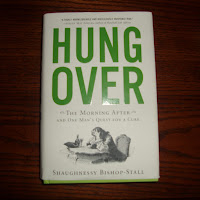
Nonetheless, the title Hungover:
theMorning After and One Man’s Quest
for a Cure caught my eye on the ER Hamilton bookseller website. The Canadian
author Shaughnessy Bishop-Stall relates the story of his international travels.
Just in the interest of research he gets drunk almost “every night now” and
tries hangover "cures" in various cities. They range from a brutal
massage in Switzerland to an IV drip in the Netherlands. He also does things
that are not advisable to do hungover such as driving a race car and jumping
off the Stratosphere in Las Vegas. The latter unexpectedly cured a hangover:
the terror and adrenaline did the job, or perhaps just distracted him from his
discomfort. (He was properly harnessed of course; unharnessed couldn’t possibly
work more than once.) He does come up with a formula that he says works for him
though he admits it could be just a placebo effect with no validity for anyone
else. It’s a weird mix of B vitamins and other ingredients including some (e.g.
frankincense) that might be hard to find last minute on New Year’s Eve; it also
must be taken between the last drink and going to bed. (If you really need to
be alert in the morning, I wouldn’t bet on this “cure.”)
Oddly enough, despite
alcohol being the most studied of popular intoxicants, scientists still don’t
really agree on what causes hangovers. Dehydration and the build-up of acetaldehyde
are commonly cited in popular literature, but dehydration is just one symptom (one
easily prevented or fixed at that) among many, and hangovers typically are at
their worst when acetaldehyde already has dropped to a low level. Sugary drinks
make hangovers worse due to the formation of lactates, but eliminating sugar
will not eliminate hangovers, only marginally lessen the severity. The most
promising idea is that hangovers are an inflammatory immune system reaction.
This hypothesis is supported by a high positive correlation of the production of
cytokine (an immune system signaling molecule) with hangovers. This is why
anti-inflammatories (including plain old aspirin) do help. The simplest solution,
as the finger-waggers among us always tell us (correctly, unfortunately), is not
to overindulge in the first place. Bishop-Stall’s book is a cautionary tale in
this regard too. His boozy research, which lasted several years, cost him
dearly in his personal life as intemperate lifestyles often do. Some argue, on
the other hand, that one can overcorrect the other way. Raymond Chandler: “I think a man ought to get drunk at least twice a
year just on principle, so he won't let himself get snotty about it.” Perhaps,
though Raymond might have exceeded twice.
Lefty Frizzell & Johnny Bond - Sick, Sober And Sorry (1957)
Back in July I mentioned an intent to make digital versions
of my family/personal photo albums. I didn’t want to create just page after
page of disordered scanned images but coherent albums with chronology and
commentary that would be comprehensible to a stranger – and that could be
stored on a flash drive. The likelihood is low that any stranger ever will look
at them and try to make sense of them, but I wanted to make it possible. Not
until the beginning of this month did I take a stab at doing this. Despite a
somewhat desultory approach to the task, I’ve made some headway though there is
still far to go. As source material, there exist in my closet four physical real-space
album volumes with
only the loosest internal order: 1) 1890s to 1955, 2) 1956-1969, 3) 1970-2001,
and 4) 2002-present. #4 is the thinnest since it consists mostly of printouts
of digital photos, and I haven’t printed more than a small fraction of those I
have saved. Digitizing the first three albums (I’m keeping the four volume
chronology) requires a lot of scanning but at least the original photos are all in
the same place. Most of the pics from the past 20 years, on the other hand, are
already digital but are scattered here and there on a variety of devices; the
physical album for this period is too incomplete to provide much guidance.
Editing is a must. It’s as important to know what exclude from an album as what
to include: most of our photos are best left out of them and stored (if at all)
loose in a box, be the box literal or virtual. Perspective is also something to be
considered: e.g. identifying someone in an image as, say, a great grandmother is obviously a
perspective of the album assembler, not (probably) the reader. In the preface
to Volume I of the digital albums, I wrote the following: “Every photo album, like every narrative, has to be from a
particular perspective if it is to have any coherence rather than being a
random gallimaufry of images. Stories can have multiple narratives, true
enough, but each of those sub-stories still has a single perspective. This
album, assembled by me, is inevitably from my perspective – not only from
narcissism, though I won’t try to deny a quantity of that, but because I cannot
write or post from any other without wandering into fiction. Besides, as the
last one standing in my branch of the family this album is not designed to be
shared at family gatherings where multiple perspectives are expected and
appreciated. That gathering would consist of… well… me. It is possible that
this will be perused at some point by friends or by two-or-more-step-removed
relatives who might share some elements of the history recorded in it. If so,
hi there. Take what you will from it that is relevant to you. As for the rest,
consider it a visit with Richard who is making everything about himself in his
usual fashion.” The reader may notice a sense of mortality in that preface.
This is an inevitable consequence of looking at a family photo album – at least
after a certain age. All but a few of the people imaged in Volume I are gone
(all the survivors are seniors), well over half of those in Volume II are gone
as well, and a large minority in Volume III. When I was in high school in the 1960s the breakthroughs in
bioscience were fresh and there was every expectation that a biotech revolution
would happen in the next few decades to match the mechanical and electronic
revolution of the previous half century. “Some of you sitting in this very
classroom,” one biology teacher told us, “will live to be 200.” We’d have
colonies on the moon by 2000, too. There is a difference between those two predictions. The
technology exists so that we could
have colonies on the moon at this time if we wanted them. They would just be so
insanely expensive to establish and maintain as to make no sense. A 200 year
lifespan, however, is off the table no matter what resources are devoted to it.
Aging is not a singular process but involves a convergence of ever diminishing
resilience along multiple pathways. Researchers publishing in Naturemake this point and came up with a maximum theoretical
lifespan if everything in a person’s life in terms of health went absolutely perfectly:
“Formally, such a state of ‘zero-resilience’ at the critical point corresponds
to the absolute zero on the vitality scale in the Strehler–Mildvan theory of
aging, thus representing a natural limit on human lifespan… A recent careful
analysis of human demographic data supports this argument and yields an
estimate for limiting lifespan of 138 years.” It should be noted that no one
ever has lived 138 years as far as we know. The longest life that is reliably
documented (122) is that of Jeanne Louise Calment (1875-1997).
By coincidence my recreational reading material last week was
by John Martin Fischer, a philosopher with The Immortality Project, titled Death, Immortality and Meaning in Life.
It’s an ambitious title for a book only 196 pages long. The book summarizes
philosophical takes on the subject from Epicurus to Becker. The Immortality
Project actually gets its name from the influential 1973 book The Denial of Death for which author Ernest
Becker won a posthumous Pulitzer in 1974. Humans are the only animals aware
they are mortal, and Becker argued that in the process of trying to escape our
mortality we developed civilization, art, family legacies, and religion. (We
also develop neuroses, but that is another issue.) These “immortality projects”
are attempts to ensure that something of ourselves survives. Making a digital
photo album presumably is one such project, too, albeit a modest one. All such projects are ultimately doomed of course. Nothing is
forever: not civilization and not the planet itself. But a brief existence is
still better than none. Wrote Kurt Vonnegut in Cat’s Cradle, “And I was some of the mud that got to sit up and
look around. Lucky me, lucky mud.”
I have an eating schedule that is idiosyncratic. (My friends
sometimes choose a less diplomatic adjective.) I eat every other day. I don’t
recommend the schedule to anyone else. For some people it might well be
harmful. But it works for me. I adopted this pattern late in 1975 when my
post-college metabolism shifted. The same daily number of calories that had kept
my weight steady during the previous five years instead rapidly packed on unwanted
pounds. It then took the better part of a year to develop a sustainable (for
me) response. Rather than cut back on my daily intake to below what felt “normal”
– i.e. rather than be hungry every single day – I opted for a one-day-on-one-day-off
schedule. This was before “intermittent fasting” was fashionable; I just
preferred being hungry every other
day. I ate whatever I wanted one day and then didn’t eat at all the next. The
strategy worked. I dropped 30 pounds (14 kg) within the year and kept the
weight off for more than two decades. Around the turn of the current century,
however, my life became difficult. (Among friends I sometimes choose a less
diplomatic adjective.) My self-discipline suffered. The result was the same as
in 1975. From 2000 to 2020 I repeatedly restarted the old on-off schedule (with
short term success) only to break with it repeatedly with the same-old results.
Finally late last year I got back solidly on the on-off schedule. When special food-related
events fall on what otherwise would be an “off” day (as did Thanksgiving), I
fast two days in a row ahead of the event in order to get into synch. I dropped
30 pounds in 2021 just as in 1975. Regrettably I didn’t drop 30 years as well,
but one takes what one can get. Breakfast is a key part of sticking to my routine. I can
forgo that snack tonight if I know a good breakfast is only a few hours plus a
night’s sleep away. I have a favorite breakfast spot and usually rotate among
four very non-vegan selections: country fried steak (called chicken fried in
some places) with eggs over easy; sausage and onion omelet with a side of bacon;
chili jalapeño cheese omelet with a side of sausage; and eggs over easy on
prime rib hash with bacon. All come with home fried potatoes and toast, though
I always say to hold the toast. I’ll sometimes deviate from these with a taco
omelet or something, but those four are the mainstays. Since returning to the
on-off schedule I have lost my taste for sweet breakfasts: the savory options
hold sway all the way. Besides, regularly eating sugary blueberry pancakes
soaked in maple syrup might be tempting fate given the national epidemic of
Type II diabetes.
Country fried steak at Marilyn's in Chester comes with three eggs and toast
There are supposedly personality differences between sweet
and savory breakfast aficionados according to an article in The New York Post. Among other things the savory fans are more likely to like rock, sci-fi, and
cats. Well, I do like those though I suspect many eaters of crepes and Begian
waffles do too. The same article notes that the biggest demographic for avocado
toast and hummus is men aged 25-34 – yet another reason to worry about this age
group.
The “science” regarding the value of breakfast as in so many
other dietary things is conflicting. According to an Australian study published
in the British Journal of Medicine, what
you eat is more important than when you eat it.Says professor and study co-author Flavia Cicuttini, “We
found that breakfast is not the most important time of the day to eat, even
though that belief is really entrenched in our society and around the world.” The
authors did not find evidence that breakfast aids weight loss despite common
claims to this effect in popular literature; on the contrary they found that
breakfast eaters ate 260 more calories on average daily than those who skipped the
meal. Yet, other scientists argue that there is an advantage to a morning meal
in order to stabilize blood sugar levels and boost immunity. Says Dr. Barry
Sears of the Inflammation Research Foundation, “By having breakfast, you refill
the liver glycogen levels so that the cortisol levels can decrease. If you
don't eat breakfast, then cortisol levels will continue to increase to maintain
blood glucose levels eventually causing insulin resistance that makes you more
hungry throughout the day.” Perhaps by skipping breakfast (along with other meals) one
day and eating it the next I can combine the benefits of both regimens. Or
perhaps I will suffer the ill effects of both. Whatever the case may be, I’m
looking forward to sitting at my usual table tomorrow. Tomorrow, I think, is a
country fried steak day. Today is an “off” day so this morning I just had blues
for breakfast. That was OK too.