Wednesday, February 24, 2021

The Big Snooze

This morning a cat jumped on my head as I lay in bed. I glanced at the digital clock. It read 9:15. There is no particular time when I need to get up in the morning anymore, so I was wasn’t late for anything (except from the perspective of a hungry cat), but that was an anomalous reading nonetheless. 8:00 a.m. is a more typical time for me to arise these days, and even that feels very lazily late to me after decades of school and work schedules that demanded much earlier rises. Even if I’m up until 3:00 a.m. (once commonplace but now a rarity) I’ll most likely be up before the readout changes from 7:59 to 8:00. During the day I’ll notice the missed hours of sleep however. I have no explanation for this morning’s delay other than that whatever complex regulates such things (suprachiasmatic nuclei and the pineal gland have something to do with it, most sources say) decided I needed more sleep, just as some mornings (like yesterday) it decides I should be wide awake at 7:00, and on some nights (thankfully few lately) it decides I won’t sleep at all.


It’s not entirely clear why we need sleep. There are numerous hypotheses ranging from resetting the immune system to consolidating memories, though despite decades of research they are only hypotheses. (One suggestion is that it kept our ancestors out of trouble at night when they couldn’t see dangers well if they wandered around, though it seems to me that a bunch of snoozing hominins would be very vulnerable to predators.) There are notable negative physical effects from not getting enough sleep including hormonal imbalance, hypertension, and increased risk of obesity, diabetes, and heart attack. There are a handful of people who get by on just a few hours per night without noticeable ill effects (a study published in Science implicates a genetic mutation on the gene DEC2 as the cause) but even they need some sleep; they are just more efficient sleepers who get done in less time whatever the rest of do when zonked out for eight hours. As that may be, it is unknown for certain whether it is sleep per se that is healthful or whether it is the thwarting of the sleep-inducing systems that is unhealthful. In a disturbing 1989 study at the University of Chicago, ten rats were subjected to total sleep deprivation. All of them died between day 11 and day 32. No cause of death could be found. There were symptoms to be sure including odd ones such as lesions on the tails, but nothing normally lethal such as organ failures or blood poisons. They just died.
 
For obvious reasons, the research team didn’t repeat the experiment on people, but there have been numerous less extreme sleep deprivation experiments on humans. The record for sleep deprivation is held by Randy Gardner who was 17 at the time. (There are accounts of others who since have beaten his record, but they are not independently verified.) In 1964 he stayed awake for 264.4 hours: over 11 days. He found the experience awful and lost a grip on reality toward the end (hallucinations are common in cases of severe sleep deprivation), but after a 14-hour nap he recovered completely. There were no health aftereffects.
 
The longest I ever was awake at single stretch was 75 hours. This was at George Washington University as long ago as 1974. I was wrapping up two term papers before their deadline. All the (pre-internet) research was finished and the papers were roughed out, but they still needed substantial work. With no other stimulants but Mountain Dew (for readers in countries where it isn’t sold, Mountain Dew is a caffeinated fizzy drink) I plugged away for three days without sleep. At 10:40 a.m. on the due date, a Friday, I finished typing the very last bibliography entry, grabbed both papers, and left my dorm on 19th Street. One paper was due at 11 and the other at 1. As I strolled along F Street my vision was fuzzy, the DC street sounds and my own voice were oddly muted, and my feet felt as though big soft pillows were strapped to them. Door handles felt rubbery. The experience wasn’t quite hallucinatory, but it came close. When I returned to my dorm after delivering the papers I slept for 12 hours. I didn’t know what day it was when I woke up. I’m satisfied to let 75 hours stand as a personal best. I’ve since gone as much as 40 hours at a stretch, but unintentionally: a sleepless night occurs now and then. It makes one appreciate the next snooze. Rita Rudner: “Sleep is the best of both worlds; you get to be alive and unconscious.”
 
Sporadic short-term insomnia is normal: stress, worries, heartburn from overeating, and even itches can cause it, along with a multitude of other things. Sometimes there is no discernible reason, in which case you might as well get up and do something else. This type of insomnia is self-limiting. At some point our own biology will put us to sleep. Chronic insomnia is another matter. Any number of medical and mental health problems can cause it that are worth addressing. For most of us most of the time, however, insufficient sleep isn’t something forced upon us. It is our own fault: we stay up too late even if we must get up early. It’s a hard habit to break, but the benefits are large if we do. "For any purpose requiring the Energy whether of the Body or the Mind,” wrote Dr. William Kitchener in his 1821 book The Art of Invigorating and Prolonging Life, "A 'forty-winks' nap in an horizontal posture is the best preparative for any extraordinary exertions of either." So too.

Sarah Vaughan – Through a Long and Sleepless Night


Wednesday, February 17, 2021

Sound and Fury Signifying Nothing

Well, maybe just a little something. Two reviews:

** **
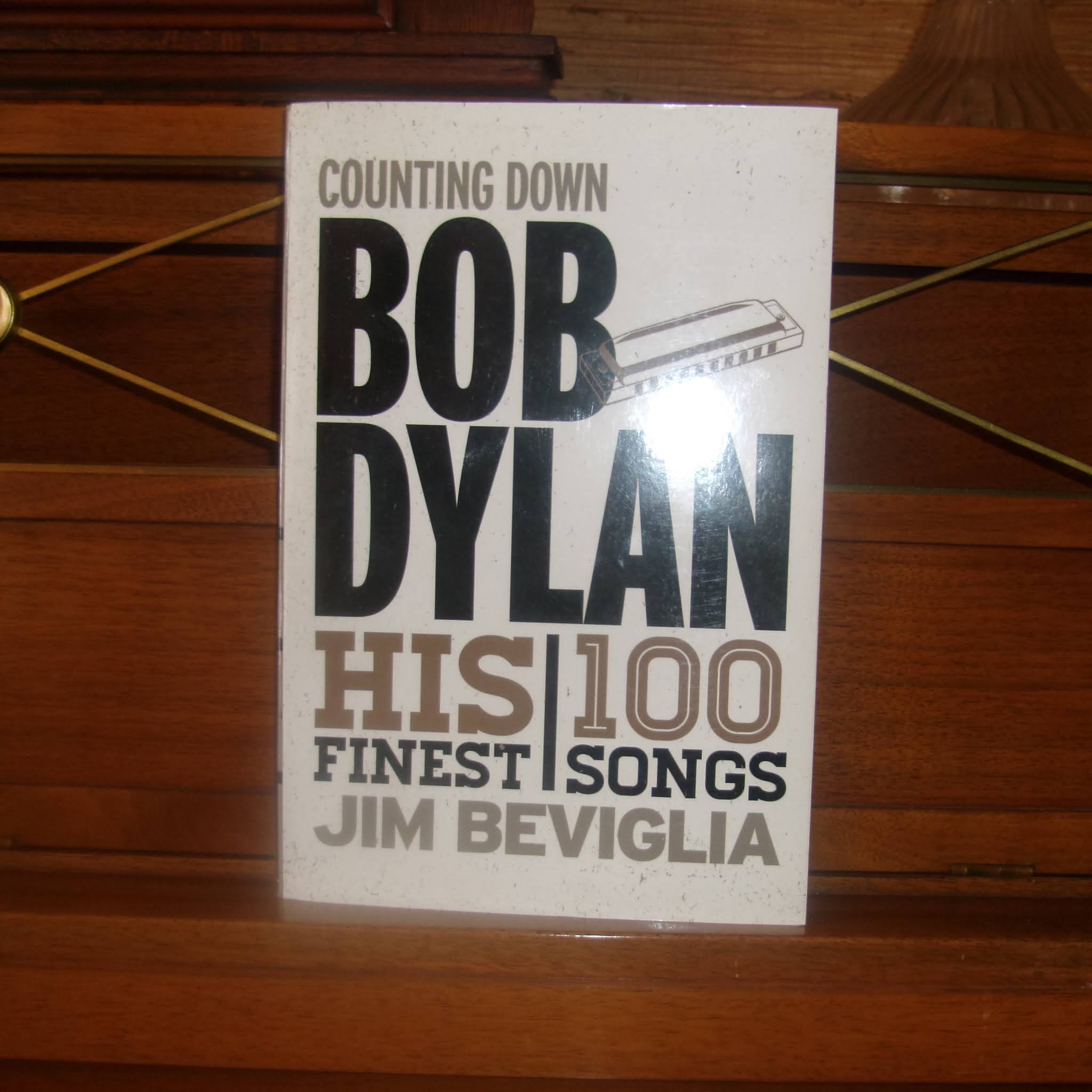
Counting Down Bob Dylan: His 100 Finest Songs by Jim Beviglia
 
Most of us are dilettantes most of the time. We dabble in this and that, sometimes out of simple interest and sometimes for some productive purpose. Either way, we rely on the specialists who research, organize, and present the information in which we can dabble. Suppose you wish to write some historical fiction involving, say, a Carthaginian merchant trader: you will want to know something about what the ships of that era were like. (The book to consult in that case would be The Ancient Mariners by the superb classicist Lionel Casson.) You don’t need to know everything: just enough to suit the needs of your story, but that requires the detailed work of a scholar from which to pick and choose.
 
Jim Beviglia is quite the specialist regarding the music of Bob Dylan. His familiarity with Dylan’s albums from repeated listening goes beyond simple fandom. For example, he writes about understanding the gist of the song “Lily, Rosemary, and the Jack of Hearts” from the 1975 Blood on the Tracks album, “It probably won’t happen the first time; it may not even happen the tenth.” I’m more of a Dylan dilettante. I like and admire much of his music, but I have no wish to listen to the Western-flavored “Lily, Rosemary, and the Jack of Hearts” ten times. I’m glad Beviglia did however. I’m also glad he wrote about it since the next time I do hear it I’ll be able to get more out of it than I likely would on my own.


All such lists are idiosyncratic. His #1 pick “Sad-Eyed Lady of the Lowlands” from the 1966 Blonde on Blonde album probably isn’t yours. Though I like the song it isn’t mine. Songs and genres (Dylan performs in several) affect each of us in a personal way. He acknowledges this when commenting on his #10 pick “Like a Rolling Stone”: “Which is why labeling it the best rock song of all time and labeling it the tenth best Dylan song need not be contradictory statements.” Fortunately, 100 songs are enough to cover the spectrum. He gives a page or two of analysis to each number.
 
Dylan’s lyrics can be deep pockets that accommodate a lot of different meanings, but they somehow often affect us on a subverbal level as well. Beviglia makes sense of the lyrics where he can and explains why opacity is sometimes better where he can’t. The lyrics even when seemingly simple often subvert themselves. In the case of It Ain’t Me, Babe, for example, the narrator’s surface admission that he doesn’t measure up has an underlying accusation that the demands are unreasonable: “someone who will die for you and more.” Beviglia doesn’t get hung up on the words alone but gives due regard to the musical whole. Dylan no doubt would approve, for in his acceptance speech for the Nobel Prize in literature he told the committee they had made a mistake: “But songs are unlike literature. They’re meant to be sung, not read. The words in Shakespeare’s plays were meant to be acted on the stage. Just as lyrics in songs are meant to be sung, not read on a page. And I hope some of you get the chance to listen to these lyrics the way they were intended to be heard: in concert or on record or however people are listening to songs these days.” (He took the prize money though: he’s not a dummy.)
 
A lot of the expected Greatest Hits songs are included on Beviglia’s list but so are relatively obscure selections from every studio album (and from a couple bootlegs) up through 2012 including albums from the 1980s, which were not Dylan’s best regarded decade. (“Greatest hits” and “finest” are not interchangeable terms, after all.) There are also representatives from every one of his genres including folk, blues, country, rock, and however one might categorize what he did with the Traveling Wilburys. My copy of the book is currently on a shelf under my stereo where it is likely to remain for consultation the next time I dabble with a Dylan album.
 
One glaring omission from the book is not the author’s fault since it was published prior to Dylan’s 2020 album Rough and Rowdy Ways, which I reviewed positively last August. I think one or two numbers from this album might otherwise have muscled into the 100.
 

** **
The Pretty Reckless – Death by Rock and Roll
 
Like most of my generation I find the bulk of today’s hit pop music uninspiring – not offensive, just meh. Fortunately for those of us who don’t want to just keep replaying old music instead, there is plenty of solid work being done by young rock and blues artists. They even have big youthful audiences: just not big enough for any of their albums to have cracked the top ten billboard chart in more than a decade. One finally has. It is by a band Amazon has recommended to me for years based on my other purchases, and on this occasion I took the AI’s advice.
 
There always are some bands that it is chic to dismiss (along with their fans) for reasons other than their music even as they remain a significant presence in the industry. One of them since 2010 has been The Pretty Reckless. It’s been a long time since I was a kid and I have no kids of my own, so I never watched a kid-oriented TV show called Gossip Girl and thereby was unaware prior to a few months ago that frontwoman Taylor Momsen, currently 27, had a previous career as a child actress. It has been a double-edged sword for her: instant name recognition but a tendency for many not to take her seriously on that account. Also, she happens to be an exceptionally attractive young lady and isn’t remotely shy or apologetic about exploiting the fact, which is also double-edged in today’s peculiar social environment. The band’s 2021 album Death by Rock and Roll should put an end to that dismissal. It is rock to take seriously.
 
Out of curiosity I have also sampled the band’s previous three albums, which are OK. They have a few genuine highlights, but overall they are generic hard rock that is just OK. They sound like a band that would be a favorite at the local pub but nothing more. (Remember music clubs? Was that only a year ago?) The new album is still straightforward rock and roll but it has a mature sound and definitely has benefited by input from members of Soundgarden and Rage Against the Machine. For those of us tired of electronic sounds and overmixing, it is refreshingly real. The lyrics are affecting, the vocals are strong, and the instrumentals professional. It’s a good album.
 
Three of the tracks may be familiar to the reader since they were released as singles in 2020. The title track was a major hit while an acoustic version of it (not on the album but on YouTube) was almost as popular as the fully amped one. The album itself was delayed, first by the deaths of two people associated with the band and then by covid restrictions. The tracks are not all of a kind but range from the thumping “My Bones” to the melodic “Got So High.” “Rock and Roll Heaven” refers back to Taylor’s own age: 27 being the year rockers notoriously have trouble getting past.
 
It is only February and, in truth, I don’t listen to many new albums anymore anyway, but with those caveats it’s my favorite album of the year so far.

Death by Rock and Roll, title track


Sunday, February 14, 2021

Small Lives

 For the past year our macroscopic lives have been dominated by the microscopic: a pathogen that is not by most definitions “life,” though it teeters on the edge. A virus is just DNA or RNA wrapped in protein. By itself it doesn’t do anything. It is great at not doing anything. One dug up in Siberia in 2014 (Pithovirus sibericum) had been doing nothing for 30,000 years, but when introduced to an amoeba it quickly highjacked the cell’s machinery to make more of itself, as viruses do. Few last that long of course. Outside a living organism in exposed environments a virus more typically lasts a few hours – in direct sunlight most (including coronavirus) are destroyed in minutes. Give one a little shade and moisture however, and it can last days. Give it permafrost and apparently it lasts millennia.
 
The overwhelming majority of viruses ignore us. They prefer infecting bacteria or nonhuman large organisms. Even when they hang out inside us, most do nothing. According to biologist Dana Willner at San Diego State University, samples show a healthy human at any moment has on average 174 species of virus in the lungs alone. They do no harm there. Of all the millions of species of viruses in the world, just 263 (depending on how you count different strains of the same virus) are known to affect humans. These can find their way into us in a variety of ways – the nose being a favored but definitely nonexclusive entrance. Counterintuitively, kissing is not very effective for viral transmission, which is probably good news for Valentine’s Day. A University of Wisconsin test of volunteers with colds who tried to infect other volunteers by means of kisses resulted in almost no viral transmission. Droplets from sneezes or from touching one’s own face with contaminated hands are far more effective at spreading colds.
 
Star Trek: "The Immunity Syndrome"

While the mouth (saliva in particular) may be unfriendly to most (not all) viruses, it’s a welcome host to a variety of bacteria and protids. Kissing does transmit these. In fact, a typical French kiss will transfer about 1 billion bacteria between the osculating couple, along with other bits of detritus that it is best not to list. They seldom cause trouble, but they can be bad news when they do. 1,415 are known to cause disease in humans. Once again, that is a tiny percentage of the microbes we encounter, but they are enough. Most of the bacteria and protids inside us are harmless while many are beneficial. In the gut, some are vital for digestion to work properly. Each of us carries trillions of bacterial cells: more than the number of cells that make up our own bodies. Since bacteria are so much smaller than our own cells, however, they account for only 3 pounds (1.35kg) of an average person’s weight.
 
A worrisome trend is that the bacteria that do us harm are growing tougher thanks to our own success in developing (and overusing) antibiotics. This risk was understood very early. In his 1945 acceptance speech for the Nobel prize, Alexander Fleming (discoverer of penicillin) warned that microbes would develop resistance. Germs that are still susceptible to penicillin today sometimes require doses an order of magnitude greater than they did in the 1940s. New antibiotics continue to be developed, but they in turn diminish in effectiveness with use. The day may come when we will need to be as careful of random scrapes and minor injuries as our 19th century forbearers.
 
In the end, as in the beginning, the world belongs to the microbes. We are the brief interlopers. For the huge majority of earth’s geological history, algae, protids, and bacteria were the only life that existed. When the sun’s evolution makes the earth uninhabitable for large plants and animals (as it will in a few hundred million years regardless of human activity – assuming some other disaster such as an asteroid or supervolcano doesn’t end us first), microbes will be all that remain. They were here before us and they’ll be here after us. Had microbes the capacity to consider us at all, perhaps they would regard us a benign infestation that aids in their reproduction and digestion. They should party it up while the buffet lasts.
 
 
Weird Al Yankovic – Germs


Sunday, February 7, 2021

They Are Among Us

Comic books are a common source for movies and TV shows primarily because they have a good track record of making money, but they have the secondary benefit that the adaptation to the screen is relatively straightforward. Comic books as they stand practically are storyboards. This is so much the case that adaptations sometimes go the other way. Novelist Christopher Moore (Noir, Shakespeare for Squirrels, Bloodsucking Fiends: A Love Story, et al.) once wrote a screenplay called The Griff; after more than a decade of it not being made into a movie, he morphed it into a comic book. While sales of comic books (and YA novels) have held up better than sales of adult prose literature, all of them trend downward. A movie that performs badly at the box office will have far more viewers than even a popular (by the standards of publishing) comic-book/graphic-novel ever will have readers. So, except in the obvious case of superhero flicks, most viewers are likely to be unaware of the original comic’s existence. Just a few examples: Wanted, Surrogates, Kingsman, Kick-Ass, The Mask, 300, and Scott Pilgrim vs the World.
 
The screen adaptation often differs in significant ways from the source material. This is understandable. As a comic-book-loving character in the movie Kick-Ass helpfully explains in the dialogue, what works on page doesn’t always work on screen. In the case of that very movie, for example, (*SPOILERS* follow) David gets the girl and Big Daddy’s backstory is treated as factual, whereas in the comic Katie has her boyfriend beat up David after the big reveal and there is a major twist to Big Daddy’s story. In Wanted, the screenwriters balked at the full nihilism of the comic in which the protagonists are self-serving psychopaths, pure and simple; in the movie they are working on behalf of Fate, a notion at which the comic book versions of the characters would have laughed. The TV show Painkiller Jane bears no resemblance at all to the comics other than the heroine’s self-healing abilities. So, I was surprised to a see a fairly close adherence of Syfy’s new series Resident Alien to the comics, the first three volumes of which I read about a year ago – not rigid adherence but fairly close.


The TV show had a troubled launch. It was initially slated to appear last summer, but covid restrictions got in the way of filming. Production resumed eventually despite the restrictions and the show premiered a couple weeks ago. Alan Tudyk portrays a stranded extraterrestrial in the small isolated mountain town of Patience Colorado. He takes on the persona of Dr. Harry Vanderspeigle who owns a small lakefront vacation cabin. He tries to keep a low profile, but one day he is called upon by the local sheriff to do a forensic examination at an apparent murder scene. The local town doctor can’t do it because he was the victim. “Vanderspeigle” is then asked to fill in as town doctor. He thereby becomes involved with the locals in spite of himself, particularly with the nurse Asta Twelvetrees (Sara Tomko). Fewer than one in a million humans are able to see through the human appearance to the alien beneath, but as luck would have it the mayor’s young son is one of them, even though no one believes him.
 
Tudyk is an ideal choice for the role. He has a wide range, having been excellent as the eccentric pilot in Firefly, the psychotic genius with multiple personalities in Dollhouse, and the well-meaning good-old-boy in Tucker and Dale vs Evil, among other roles. He pulls off the necessary alien weirdness that is a bare millimeter on the credible side of human quirkiness – not an easy balance. One can see how people encountering him might be momentarily speechless but then shrug.
 
The trope of the alien trying to blend into human society is an old one: an early appearance on TV being Gore Vidal’s 1955 teleplay Visit to a Small Planet. (This teleplay subsequently was adapted as a Broadway play, which in turn was transmogrified into an awful movie starring Jerry Lewis.) The trope is resurrected regularly: My Favorite Martian, Mork and Mindy, ALF, 3rd Rock from the Sun, Roswell and more. Usually (but not always) the tone is comedic despite the theme of (pun unavoidable) alienation. (The 1989 show Alien Nation embraced the pun.) So, Resident Alien is not breaking new ground, but it’s still a likable show that proves there is life in the concept still. It does have a unique flavor. It is fundamentally a comedy, but a very dark one – much darker than the comic book version. After all, the alien’s task in coming to earth was to exterminate humans, he acquired the Vanderspeigle identity by killing the real one, and the show includes scenes such as a widow accidentally walking in on her husband’s autopsy. Presumably, the series arc will involve the growth of second thoughts in the alien about his primary mission, but we shall see.
 
I don’t put new TV shows on my watch list very often anymore, but this one is on it. Shakespeare it’s not, but it’s a pleasant way to spend an hour.


Thursday, February 4, 2021

Digging Snow

Winters in NJ don’t really have a normal. They vary wildly from one year to the next: sometimes autumn-like and snow-free, sometimes bone-chilling with serial blizzards. You never know. This one so far has been a potpourri: days that were randomly balmy and icy, sunny and overcast, rainy and snowy. This past Monday was snowy one. 30 inches (76 cm) of wet and heavy snow fell, which housebound me more effectively than covid. The fellow who plows my driveway had mechanical problems with his truck thereby keeping my 200 ft (61 m) long driveway nearly impassible until late last night. Prior to then, I decided to dig out portions by hand shovel: particularly the wall of snow and ice piled up at the driveway entrance by passing municipal snow plow vehicles as well as the snow dune in front of my garage that had been augmented by snow sliding off the roof. At least in an emergency I might have been able to get my truck out of the garage and down the sloping driveway to the road even though it never could never make the return trip back up.
 

There is, of course, a risk to this. A Quebec study of 128,000 hospital admissions for heart attack over a 30 year period found a direct correlation of snowfall accumulation and deaths. A snowfall over 8 inches (20 cm) meant a 34% rise in heart attack deaths. Nearly all of the additional casualties were middle-age and senior men – in other words me.  But I have shoveled many materials over many years. My very first real paying job was with a shovel: spreading gravel on a construction site at age 16. So it would be fitting to go out with a shovel on a nonpaying job – a life arc of sorts.
 
Snow varies in weight by density, but wet snow of Monday’s variety typically weighs 20 pounds per cubic foot (318 kg per cubic meter). Doing the math on the area and depth of the driveway and walkway sections I shoveled, the total is a bit more than 12 tons (11 metric tons). I suppose I could dig out some more just so I can sing along with Tennessee Ernie Ford, but I don’t think it’s worth it. Mr. Ford was singing about coal, of course, but I do generally use a coal shovel for digging through deep snow; it is sturdier and better balanced than standard snow shovels. Anyway, the snow plow arrived eventually. I’ve contemplated acquiring a truck and plow of my own, but they are too pricey for the number of times they are useful unless you intend to conduct a side business plowing driveways. I still had to clean up, again with a shovel, after the plow, which is normal.
 
Recognizable shovels of all kinds in all parts of the world have been around at least since Neolithic times. Possibly earlier. Every structure more permanent than a tent needs a foundation, even if it is just leveled earth. Before you can build you must dig. Specialized snow shovels are older than one might think, too. A 6000-year-old one has been found in a Russian bog. The blade is carved from an elk antler. The archaeologists who studied it say the blade was tied to a wood handle. It wouldn’t have been much good for shoveling anything tougher than snow, but for that purpose it is surprisingly suitable. Shovels suited to harder digging had to wait the arrival of metallurgy, but making shovels was one of the earliest uses of metals besides weapons and jewelry. Different types for different tasks appeared quickly and the designs haven’t changed much in thousands of years. The ancient Roman Army’s entrenching shovel doesn’t look much different from the current US Army entrenching shovel except that the former doesn’t fold. In the War of Independence, George Washington’s troops used cast iron shovels made by John Ames in Massachusetts: much of the time for snow removal during the tough winters of the war years. The Ames Shovel Company, founded in 1774, is still in business.
 
I haven’t counted them (and I don’t wish to go out to the garage and barn at the moment just to do so) but I estimate that I have at present a dozen shovels, give or take a couple. I used to have more, but some were so old that the handles split and it wasn’t worth fitting a new one. (My father was a builder, so I still have a barn full of hand and power tools plus dozens of boxes of nails ranging from brads to 60-penny spikes.) Three of the shovels are snow shovels – four if you count the coal shovel.
 
Digging is so ingrained in our consciousness as a way to get at the bottom of something that “to dig” means to understand – usually connoting “liking,” though it is possible to dig something you don’t like. In my youth the verb was used in this sense commonly and unironically. Nowadays it tends to be used as a deliberate affectation: aping a beatnik speech pattern that is no longer current. Yet the meaning is still understood. Sometimes when we understand what someone tells us, we still reach for the metaphorical shovel: sometimes to deal with metaphorical snow, and sometimes for something else.
 
Barry McGuire – Why Not Stop And Dig It While You Can


Friday, January 29, 2021

Lethe

Yesterday I walked into the kitchen pantry while my mind wandered as it often does. I suddenly realized I had forgotten for what I had gone in there. I’m pretty sure this wasn’t a senior moment (something one always questions after a certain point) since I commonly did this very thing as a teenager – in fact more frequently then. In those days my mom (overestimating my academic achievement) called me the “absent minded professor.” Then, as now, my mind tended to wander onto events of the day, future plans, recent conversations, and various other matters so that I would forget the task at hand. I remembered what I was after yesterday immediately after exiting the pantry by the way: it was toothpaste, which in fairness is not something one usually retrieves from a pantry. Earlier in the morning I had noticed the tube in the bathroom was empty.
 
This sort of forgetfulness has been understood in broad outline for decades. Short-term and long-term memory storage are separate mechanisms. The former, mediated by the hippocampus, normally is good for up to 30 seconds – short enough to forget why one walked into a pantry. In order to kick a memory into long-term storage in the cortex you either have to deliberately concentrate on it or by happenstance associate it with some stimulus such as pain, fright, pleasure, intrigue, and so on. This is why soon after an hour’s commute we can’t remember most of it – only the parts where we had to concentrate because of some stressful road conditions. By the next day we might forget even these. In essence, the default setting of the brain is to forget; to remember requires effort, whether evoked spontaneously or by intent.
 
forget-me-nots
(Myosotis sylvatica)

Storing something into long-term memory changes the wiring and chemistry of neurons in the cortex so that some connections carry charges easier. These engrams are our memories, but even these frequently fade. (They are also subject to manipulation, which is why “recovered memories” in particular are notoriously unreliable.) A memory can be made not just long-term but permanent either by repeatedly calling up the memory (thereby reinforcing the wiring changes) or by associating it with some major stimulus. Traumatic stimuli are especially effective at locking in a memory, but more pleasant stimuli work, too. A very imperfect but useful analogy is a flexible green tree branch. If you flex it a little and quickly let it go, it will snap back to its original shape. It will, in essence forget the flex: an analog of forgetting a short-term memory. If you flex it repeatedly, however, or give it a sharp extreme bend, it will not snap back all the way, but will retain a partial “memory” of the flex.
 
Recent studies indicate that forgetting is an essential part of the process of making new memories long-term. Encoding all the details of an experience would clutter our minds and overload our capacity to speedily get any meaningful use from the memory. It’s important to remember at what corner to make a turn to get to a destination; it is not important to remember the rust patterns on every storm drain we pass on the way to the corner, so we don’t. It’s important to remember that a dog growled before it bit, not that there was a grass stain on its back left leg. Our brains tend to filter out the unimportant data (though odd details sometimes stick), so we are very good at remembering the gist of an event (the Darwinian advantages of which are obvious) but not the surrounding fluff. This is why eyewitness testimony is so often poor. Was the getaway car green or black? Were there two shots or three? Eyewitnesses often (in fact, usually) conflict with each other about the details and they are very open to influence; for example, if told a car was green they are likely to remember it as green whether it was or not.
 
Recalling just the gist aids survival because it helps us generalize in useful ways. In the dog example above, it’s good to generalize that a growling dog might bite, not that a growling dog with a grass stain on its back left leg might bite. That is too much detail; we could underestimate the risk of a stain-free growling dog. This is a commonplace issue in artificial intelligence as well. The problem is called “overfit,” which is when a self-learning AI attaches too much significance to random coincidences, thereby diminishing its ability to generalize and make useful predictions. An effective AI needs to be able to “forget” the unimportant stuff.
 
There are people with extraordinary long-term memories. The condition is called hyperthymesia, but it is a relative thing. People with hyperthymesia forget, too; they just forget less than the rest of us. This sounds like a great advantage, and in some ways it can be. The actress Marilu Henner famously has this type of memory; it doesn’t seem to cause her any trouble and it certainly has helped her remember her lines. Overall though, people with hyperthymesia do not do any better in life than other people; on the contrary they are at higher risk of PTSD and other obsessive disorders.
 
Experiments with rats have demonstrated various ways that neurotransmitters (dopamine in particular) affect memory retention. Understanding the process better might help with the treatment of PTSD (not enough forgetting) on one end and Alzheimer’s (too much forgetting) on the other. The scifi trope of excising or implanting specific memories does not appear to be in the cards for the foreseeable future, however, which is probably just as well.
 
I’ll end here since there is something I need to retrieve from the pantry. There was something else I wanted to say, but I forget what it was.
 
Beverly Bremers – Don't Say You Don't Remember


Friday, January 22, 2021

Flogging Blogging

 
I don’t write blogs for money, which is fortunate because like two-thirds of bloggers I don’t make any. OK, that’s not entirely true, but so close to entirely as to make no difference. All the money passed along from Google for all the ads on my site since the first one in January 2009 (a few cents here, a few there) might add up to enough to cover the cost of today’s lunch (a Philly cheesesteak from Marilyn’s) but I doubt it. Nonetheless, this is my 800th post (a nice round number that inspired this bit of retrospection), which is somewhat more than one post per week over the past 12 years. The number of readers varies one week to the next, but there are a few hundred in an average week, which is not enough to be remunerative but enough to be gratifying.
 
It is possible to make money blogging, and there is plenty of advice on the net and elsewhere telling you how to do that. The key is specializing in a particular niche such as dietary advice, financial advice, relationship advice, or…well…advice on how to make money blogging. And then there is politics, the more dehumanizing of one’s opponents the better. While this always generates a lot of hateful feedback, regardless of what the blog’s ideological content might be, it also generates traffic. (I don’t do this: not because I lack a political viewpoint [I’ve been active in a third party] but because there is more than enough of all that on the net. Besides, political “discussions” tend to drive out all others in a sort of Gresham’s Law of discourse, and there is so much else to write about.) So, even though 90% of bloggers earn nothing or a pittance, 2% earn over six-figures. Many of these successful bloggers are associated with related commercial operations, such as travel blogs on sites that sell travel packages or health blogs on sites that sell dietary supplements. Some of the statistics are puzzling. For example, blogs over 2000 words attract the most readers (2500 is the sweet spot) yet the average reader spends only 37 seconds on the site. According to a Wiki article on Speed Reading, a typical reader reads at a rate of 250 words per minute while “proficient readers are able to read 280–310 wpm without compromising comprehension.” So, I have to assume those 2500-word blogs aren’t getting a very thorough examination. But if the goal of the poster is just ad-clicks, I guess that doesn’t matter.

For those who want to try to make money this way, have at it and best of luck. Most of us have other reasons for doing it. I just kind of like it. I could expand on that: writing about a variety of topics prompts me to look into them more deeply, which is fun in itself and provides fodder for dinner conversations (remember when there were dinner conversations?); it’s a way of keeping one’s writing skills from decaying too rapidly; and it serves as a sort of online scrapbook, a reminder of where one’s head was at 5, 10, or more years ago. All of which means, I just kind of like it. I recommend it to anyone with even a slight literary itch.
 
It is, of course, a self-indulgent thing to do, but it has advantages over the other two similar self-indulgences: autobiography and journals, both of which are unabashedly about oneself. Blogging at least purports to be about things of more general interest. Besides, autobiographies are books of lies: some of commission but especially of omission. Anyone who wouldn’t leave significant things out of an autobiography has led a singularly uninteresting life. Journals (unless intended from the start to be for publication) on the other hand are more truthful by design but for that very reason are unwise in today’s world. Psychologists, educators, and therapists often urge keeping a journal as a mental health measure; it is a place where you can express privately all those things on your mind that you would leave out of an autobiography. There always has been a risk of forgetfully leaving it out where some visitor can sneak a peek at it with unfortunate consequences, but prior to the 1990s the damage was likely to be limited. There also generally was plausible deniability if the sneak-reader repeated anything. Nowadays with cell phone photos and scanners the pages can be uploaded in seconds. Privacy never can be assumed anymore, either for the spoken or written word. It is unwise to commit to writing anywhere anything you would not want publicly exposed for all to see. We write blogs with that in mind from the start, so it is not so much a problem.
 
Off course, discretion is not everyone’s strongest attribute. Most people who post unwisely get away with it most of the time because most of the time nobody cares. But one cannot always count on disinterest and ignoration. A prime example of misplaced confidence is the so-called Bling Ring of teenagers about a dozen years ago who burglarized celebrities’ homes in the LA area while posting on social media. (The surprising thing is that they got away with it for a year; Sofia Coppola’s movie The Bling Ring about the events is worth a look.) But even a minor faux pas sometimes can go viral. So, with appropriate caution, the reader (if not already doing so) might consider joining the 600,000,000 bloggers that already exist worldwide. You could be among the 2% that make a good living at it. At the very least, in about a dozen years it could pay for your lunch.
 
Stereophonics - Mr. Writer